
15 Blacksmith Master Tips the Game Does Not Tell You
Fifteen tested Blacksmith Master tips for version 1.0: hidden caps, order refresh math, worker behavior quirks, and menu mechanics the tutorial never explains.
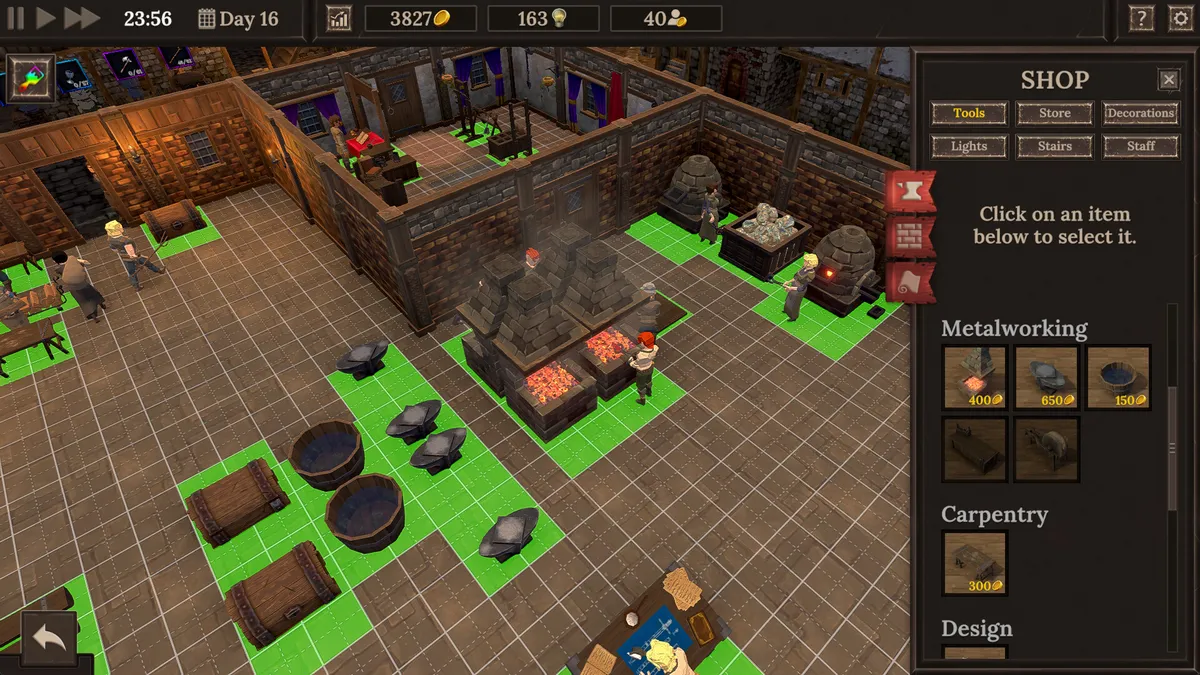
Which mechanics does Blacksmith Master hide from new players?
The tutorial explains crafting and selling, but version 1.0 leaves a surprising number of rules undocumented — and several of them quietly decide whether a forge prospers or limps. These fifteen are the ones worth knowing before your first bankruptcy.
Money and orders
- Every 20 merchant offers awards an elite worker — a high-stat hire you would otherwise pay hundreds of gold for. Chaining small, fast offers is the fastest way to stack them. A mastery node can shorten this to 17.
- Timed offers are a trap until you are stable. They appear from day 8 and pay +10% if delivered within 24 hours, but -20% if you miss. Accept only when your line is idle.
- Refreshing merchant offers costs 200 Gold and scales up. Do not refresh hunting for gold payouts early; the fee eats the difference.
- You can manually close your shop to reset customer flow — useful when a layout change would otherwise strand customers mid-shop.
Workers
- Workers stop crafting at midnight, but you keep full control of buying, upgrading, rearranging, and assigning. Night hours are free planning time.
- Blacksmiths gain 25 XP per finished blueprint on merchant work and 50 XP per 4 design points on design duty. Level-ups are earned by throughput, not by waiting — assign your best crafter to the task you want them to level in.
- Assistant walk speed is 2.2 m/s at level 0, +0.3 per level, and their bag holds exactly as many items as their skill level. One fast assistant beats two slow ones because they spend less time blocking doorways.
- Cashier wages start at 24 Gold, blacksmiths at 60, assistants at 47. That spread matters when you trim staff: cut cashiers last.
- The hire-pool refresh cost is capped at 300 Gold (with a specific super-worker trait). Refreshing late-game is nearly free — do not settle for bad traits.
Blueprints and mastery
- Blueprint unlock hints are unreliable. Community testing found many blueprints list a skill that does not actually unlock them; the real gate is often a different mastery node. When a blueprint refuses to unlock, check the actual node requirement on our mastery tree page rather than the in-game hint.
- Bigger offer sizes slow blueprint progress. As you unlock more skills, merchant offers scale up — crafting 150 items for one blueprint point is far slower than 14. Balance unlocking with your production capacity or your blueprint income stalls.
- Design points: 10/day at skill 0, +5 per skill level, plus 20% more with the right trait. Our blueprint upgrade math shows why quality beats quantity here.
Interface and 1.0 changes
- The staff menu was overhauled in 1.0 — it now supports list view and multi-edit. Use it; manually fixing twelve workers one by one is how wages leak.
- All Early Access saves load into 1.0. If you are returning, your forge is intact, but check the reworked mastery costs before spending new points.
- You can control a worker manually in a third-person view for direct crafting — handy for one-off complex orders, terrible for daily production. Automation wins.
For the systems behind these tips, see the worker traits tier list and merchant offers explained.
Related Articles
systems
Blacksmith Master Multi-Part Crafting, Explained
How multi-part crafting works in Blacksmith Master: why workers do not help each other, how assignment preferences control production, and staging big assemblies.
guides
Blacksmith Master Beginner Guide: Your First 7 Days, Day by Day
A day-by-day Blacksmith Master beginner guide for version 1.0: what to build, who to hire, which orders to take, and the mistakes that stall a new forge.
guides
Are Blueprint Upgrades Worth It? Blacksmith Master Design Point Math
The full Blacksmith Master blueprint upgrade cost analysis: design point income, the 750,910 point endgame total, and which blueprints to upgrade first.
Was this helpful?
Thanks for the feedback!