
Blacksmith Master Trade Routes: All Four Ranked by Return on Investment
All four Blacksmith Master trade routes compared: what each trades, unlock costs, shipments, and the best order for clay, wood, gold, and gems.
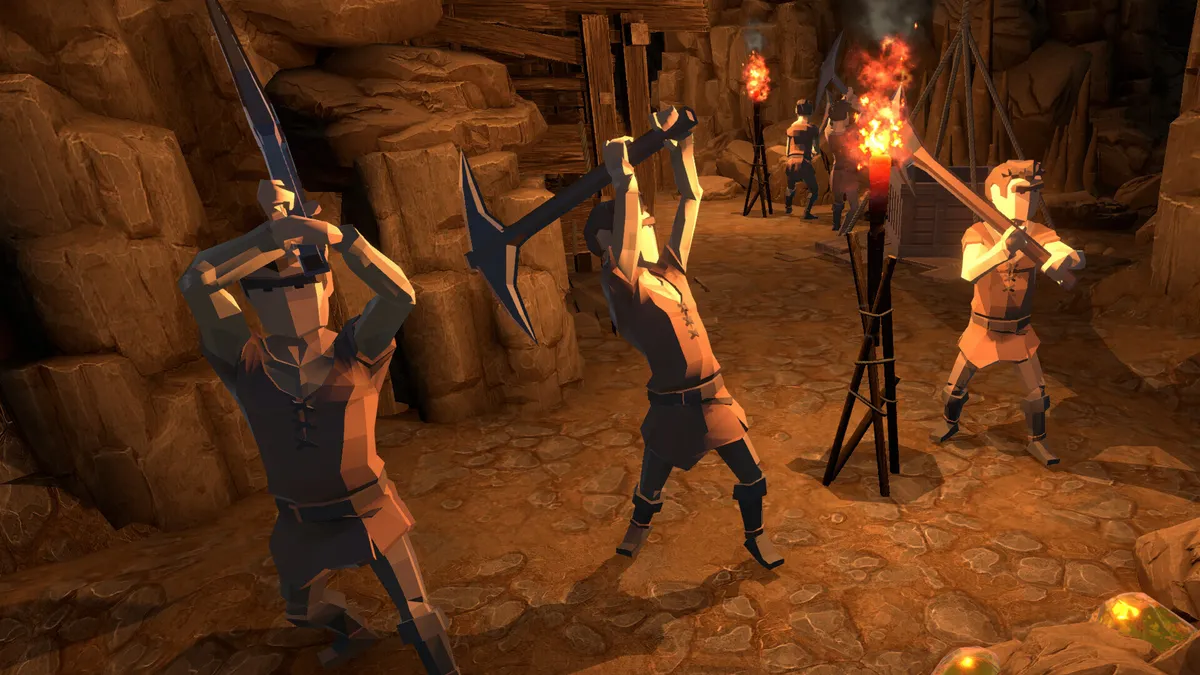
What are trade routes in Blacksmith Master?
Trade routes unlock through the mastery tree (after Smelting 3) and convert finished goods into resources you cannot efficiently buy: clay for pottery, premium woods, gold ore, and gems. Each route has four paid levels — higher levels ask for more goods and deliver more resources. A blacksmith assigned to a route crafts the requested items automatically into an Item Chest, and the shipment lands in your warehouse the next morning. The gate: you must first unlock every blueprint the route requests, so routes are as much a blueprint checklist as a resource purchase.
All four routes, full details
| Route | Trades | Level costs | Delivers |
|---|---|---|---|
| Clay Pit | Wide Cooking Pans → Clay | 10k / 20k / 50k / 100k | 20→80 Clay per shipment |
| Birch Woods | Pitchforks, Battleaxes, Amphoras → Birch | 40k / 100k / 150k / 200k | 20→160 Birch Wood |
| Gold Mine | Copper Goblets + Hunter’s Bows → Gold Ore | 60k / 150k / 250k / 350k | 15→120 Gold Ore |
| Gem Mine | Pickaxes + Shovels → Gems | 100k / 200k / 300k / 400k | Topaz → 48 Topaz, 24 Emerald, 12 Ruby, 6 Diamond |
The best unlock order
1. Clay Pit (10,000 Gold). Cheapest route, and pottery is the first high-margin catalog expansion — clay amphorae, pots, and vases sell in the 480-640 range from a single clay input. The pottery blueprints page has the full price table. ROI arrives within days.
2. Gold Mine (60,000 Gold). Gold ore feeds the jewelry line, the single most profitable product family in the game. It asks for copper goblets and hunter’s bows, so open it once those blueprints are known and your copper supply is steady.
3. Birch Woods (40,000 Gold). Premium wood supports advanced wood items; valuable, but rarely your bottleneck compared to clay and gold. Slot it third unless your wood orders are drowning.
4. Gem Mine (100,000 Gold). Expensive and demanding — pickaxes and shovels are metal-hungry — but max level delivers diamonds, the only reliable diamond source and the top of the jewelry tree. Long-term priority number one; short-term, open it when your forge genuinely out-produces its other orders.
Route staffing math
Each active route needs a dedicated blacksmith (or two at high levels) crafting trade goods full-time — that is a 60+ gold daily wage plus forgone order income. Before opening a route, confirm the delivered resource actually converts to more gold than the worker costs. Clay passes this test almost immediately; gems pass it spectacularly once jewelry quality upgrades land.
Common trade-route mistakes
- Opening a route before knowing its blueprints — the unlock gate stalls and your gold sits idle.
- Under-staffing high levels — a level-4 Gem Mine order (120 pickaxes, 120 shovels) needs real production capacity; the worker builds guide has the trade-route template.
- Letting route goods clog storage — assign an assistant to keep the Item Chest clear.
Where routes fit in the economy
Routes are the bridge between mid-game and endgame: clay feeds pottery margins, gold and gems feed jewelry, birch feeds advanced woodwork. Combined with the siege commissions and coin minting from 1.0, they form the three-legged money stool covered in the late game money guide.
Related Articles
blueprints
Blacksmith Master Pottery Blueprints: High Margins from the Clay Pit Route
All Blacksmith Master pottery blueprints: amphorae, pots, and vases from one clay input, unlocked through the Clay Pit trade route, with sell prices and profit math.
guides
Are Blueprint Upgrades Worth It? Blacksmith Master Design Point Math
The full Blacksmith Master blueprint upgrade cost analysis: design point income, the 750,910 point endgame total, and which blueprints to upgrade first.
guides
Blacksmith Master Coin Minting Guide: Turning Surplus Ingots into Gold
How coin minting works in Blacksmith Master 1.0: when converting ingots to coins beats selling them, setup requirements, and where minting fits the endgame economy.
Was this helpful?
Thanks for the feedback!