
Blacksmith Master Mastery Tree: Best Unlock Order for 1.0
The optimal Blacksmith Master mastery tree unlock order for 1.0: which nodes pay back first and which early unlocks drain your gold.
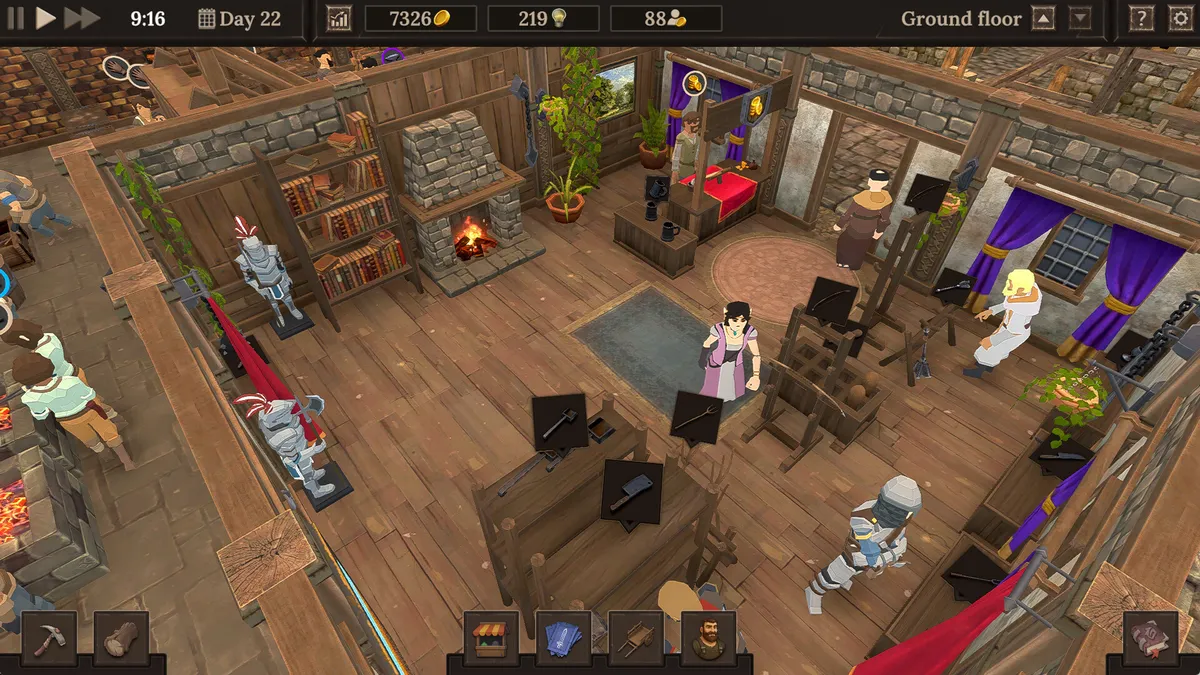
Which mastery nodes should I unlock first in Blacksmith Master?
Mastery points come from crafting — every item you finish feeds the tree — so the order you spend them effectively sets your income curve. The ranking below is by payback: how quickly each node returns more gold than the points cost you in forgone alternatives. For raw node costs, see the full mastery tree table.
Phase 1: The opening five (Days 1-10)
- Carpentry (1 point) — one point, immediate access to wooden goods and a second order type.
- Staff (2 points) — unlocks hiring; nothing else functions without it.
- Discounted Wood (30 points) — a permanent 20% cut on a daily expense. This is the best pure-economy node in the early tree.
- Blueprint Upgrades (50 points) — the Design Table converts idle hours into higher sell prices across your whole catalog.
- Extra Cart (100 points) — a third merchant order slot, worth up to a third more daily order income.
Together these five carry you from day 1 to a stable, profitable forge. Details on the economy behind them live in the early money guide.
Phase 2: The production backbone (Days 10-30)
- Assistants (60 points) — hiring the runners your forge is silently missing.
- Discounted Ingots (75 points) — the metal twin of Discounted Wood; open when ingot restock spending passes wood.
- Smelting 1 (150 points) — stops you buying ingots at retail (smelting math).
- Iron Mine (200 points) — daily ore deliveries; the moment mining beats buying.
- Store (125 points) — opens retail, your second income engine (store setup math).
Phase 3: Scale (Day 30+)
Oak Forest and Pine Forest for wood self-sufficiency, Racks 2 and More Offers for retail and order throughput, Smelting 2/3 for the large ingots that advanced blueprints demand, then Trade Routes — Clay Pit first — and the Extra Cart/Hiring tiers as wages allow. Endgame nodes (basement, second and third floors, jewelry) follow the five-floor plan.
The three early traps
- Construction (20 points) — tempting because it is cheap, but walls and floors solve a problem you do not have yet. Twenty points here is twenty points not feeding Discounted Wood.
- Second Floor (100 points) — vertical space multiplies a saturated floor; it does nothing for an empty one.
- Early Hiring tiers — more candidates are useless when you cannot afford the wages of the workers you already have.
Version 1.0 changes
The 1.0 tree was expanded with new branches — the basement line, coin minting, and jewelry access among them — and several costs were rebalanced from Early Access. If you are returning with an old save, re-read costs before spending; our tables reflect version 1.0 as of November 2026.
The one-sentence answer
Unlock in the order that increases order throughput or cuts daily costs — Carpentry, Staff, Discounted Wood, Blueprint Upgrades, Extra Cart — and treat every decorative or space node as a luxury your profit margin buys later.
Related Articles
systems
Blacksmith Master Mastery Tree: Full Node List and Point Costs
The complete Blacksmith Master mastery tree for version 1.0: every confirmed node with its point cost, organized by branch, plus what each unlock actually does.
systems
Blacksmith Master Controls and Settings Explained
Blacksmith Master controls for 1.0: camera, manual crafting, accessibility options including mouse-only play, and the settings to change first.
systems
Blacksmith Master Gems: How to Get Topaz, Emerald, Ruby, and Diamond
Every way to get gems in Blacksmith Master 1.0: the Gem Mine trade route shipments, Master Miner finds, and which jewelry each gem unlocks.
Was this helpful?
Thanks for the feedback!